


While many Japan itineraries offered by travel agencies will include a brief pit stop in the hot spring resort region of Hakone, it deserves a longer stay–enough time to truly soak up the luxuriously green mountains, lung-cleansing air, and rustic vibes. We spent two nights in Gora, one of the main villages in Hakone, and wished we had stayed a few more. After arriving from the urban neon frenzy that is Tokyo, Hakone was a quiet, blissful reprieve. Hakone’s main attraction is it’s hot spring baths, or onsens, that are available at hotels and resorts throughout the area. Hakone also features plenty of outdoor recreation, with hiking paths, boat cruises on Lake Ashi, and a cable car that transports you up the side of a mountain, offering glimpses of the iconic Mount Fuji. In addition, the Hakone Open Air Museum is a wonderland of giant art installations and winding trails couched in the bucolic landscape, which is a delightful way to pass a sunny afternoon.
With all of these activities to choose from, it’s relatively easy for a sober traveler to have a fun time and not even think about drinking. Not only that, but Hakone has no night life–we couldn’t even find a restaurant open after 9pm. If you are looking to achieve a state of Zen, Hakone is designed for it. Read on to learn more about this underrated Japanese destination!
Planning a Sober Trip to Hakone


Booking your Flight to Hakone
If you are an international visitor heading to Hakone, it’s a bit of a hike to get there. Most travelers will spend a few days in Tokyo first to break up the journey, which we did.
If you are flying into Tokyo, you should know that it is served by two major airports, Narita and Haneda. While other blogs will tell you to fly into Haneda because it is physically closer to the city, very few airlines offer direct flights into that airport from the United States. American cities including Boston, New York, San Francisco, Los Angeles, and Houston all offer nonstop flights into Narita, which is about an hour from Tokyo Station via Narita Express or taxi. If you are heading straight to Hakone from the airport, you can take the train to Odawara Station via the JR Line, then transfer to the Hakone Tozan line to your final destination.
Customs in Japan
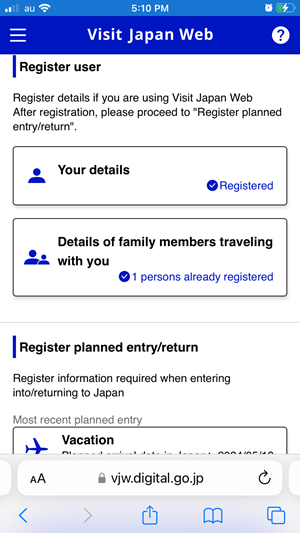
Getting through customs is a notoriously long ordeal in Japan. To make life slightly easier, you can register yourself and your travel companions on Japan Web and fill out the customs form online. You will still stand in line, but you won’t end up being one of those confused passengers furiously trying to upload the web page as you approach the customs officers.
Learn a few words of Japanese
Most Japanese citizens do not speak English, especially in more rural areas like Hakone, so it’s helpful to know a handful of words like Connichiwa (“Hello”) and Arigato (“Thanks”) to communicate with those around you. Hotel staff typically do speak enough English to check you in and to answer basic questions, but generally not waitstaff, cashiers or others you may come in contact with. Google Translate kind of works, but it often wasn’t helpful in the moment. We did our best with hand gestures and broken Japanese phrases.
Budgeting for Hakone
The Japanese yen has been weak compared to the American dollar in 2024, partly fueling the country’s tourism boom. Since Japan is not the cheapest place on earth, this helps ease the hit to your wallet. Like with all of my international trips, I purchased about $300 in foreign currency from my bank prior to leaving, to obtain a favorable exchange rate. A common denomination, 5000 yen, is equal to about $34 in US currency as of August 2024.
This tactic also gives me cash on hand in case there are any snafus with my credit card, or if I need to give a tip to the taxi driver. For Japan in particular, cash is important. While Japan is a very developed and modern country, cash is still widely used.
When Should I Plan My Trip to Hakone?
Japan has a temperate climate, with variations in weather depending on the region and elevation. In a highland location like Hakone, winter brings snowier and colder weather. However, Hakone in summer is several degrees cooler than nearby cities such as Osaka and Kyoto. If you can swing it, the shoulder seasons of Spring and Fall offer less crowds and mild weather. During our mid-May trip, we had ideal conditions during the daytime: sunny with temps in the low 70s, with a light breeze.
In addition to weather, you also have to be aware of national holidays. We strategically chose mid-May to travel to Japan, right after cherry blossom season and Golden Week but before the rains moved in during the summer months. Cherry blossom season typically runs from the end of March through mid-April and is the busiest time of year for tourism in Japan. Golden Week is a national holiday that takes place in early May, which means a lot of domestic travel and high prices everywhere. It’s best to avoid those times of year when booking your dates for Hakone.
Protecting Your Trip to Hakone
Our trip to Japan was the most expensive trip we’ve taken so far, and we wanted to make sure we didn’t light thousands of dollars on fire if, say, one of us broke an arm and were not able to travel. Since our medical insurance doesn’t cover us outside of the US, we wanted to know we’d be taken care of if anything were to happen during our vacation. So we purchased travel insurance through AXA. I truly appreciated the peace of mind it gave us as we prepared for our trip, and also while we were enjoying our time in Hakone. Prior to the pandemic, I never bought travel insurance, but now I purchase it for every international trip I embark on. It’s worth it!
Getting Around in Hakone
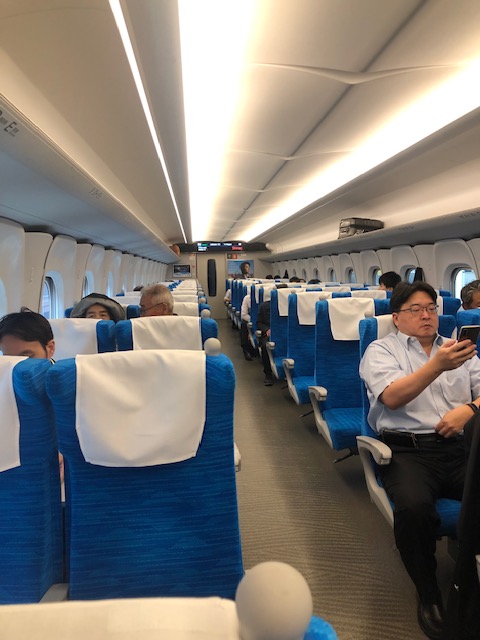
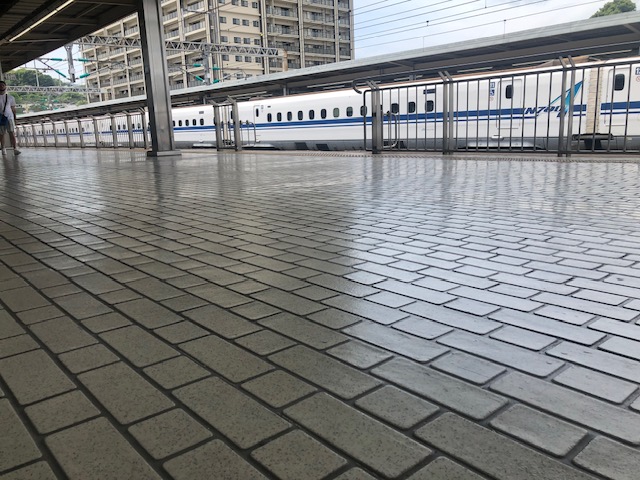

If you are spending a few days in Tokyo before heading to Hakone, you can take the Shinkansen bullet train from Tokyo to Odawara Station. We reserved our tickets at the JR ticket counter in Shinjuku Station, and then headed to Odawara from that station the next morning. Since our Hakone hotel check-in wasn’t until 3pm, we spent a few hours in Odawara visiting its eponymous samurai castle. Odawara Station has handy lockers to store your luggage if you choose to stay a few hours. While you are in Odawara Station, if you plan to stay a few days in Hakone, it will be worth it to pick up a Hakone Free Pass. You get unlimited travel on all forms of transportation in Hakone, from the buses to the trains to the Ropeway. From Odawara Station, you take Hakone Tozan Railway, which meanders up the mountainside in Hakone, stopping at each village and point of interest.
Are you thinking of renting a car? Please…don’t. The Japanese public transportation system is so good, you don’t need it. The expense of hiring a car, negotiating roads in a brand new country (on top of driving on the opposite side than you are used to), and limited parking are all a recipe for aggravation. Instead, you can relax, play on your phone, look out the window, or read a book while sitting on a clean, efficient Japanese train or bus.
Hakone Tozan Bus and Railway
This bus and railway system can take you virtually anywhere you need to go in Hakone. Lean on Google Maps to ensure you hop on the right bus in the right direction. We took the bus to Lake Ashi in the wrong direction, so we had to hop off and get back on another bus going the opposite way. But once you get the hang of it, it’s pretty convenient. If at all possible, I recommend trying to get out early, because the buses do tend to get crowded. You can also have your hotel call you a taxi if this feels intimidating.
Hakone Ropeway
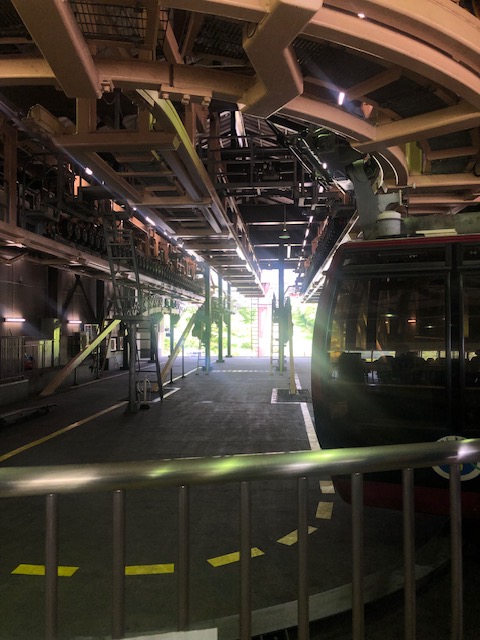

The Ropeway is one of the modes of transportation in Hakone, along with the Hakone Tozan Railway and bus, although it is more of a tourist attraction. It’s also a can’t-miss activity. The trip itself delivers a birds-eye view of Mt. Fuji, Lake Ashi and the mountains of Hakone, and makes stops in four places, including Owakudani, which features a sulfurous, steaming landscape and the famed black eggs that are said to have special properties beneficial to one’s health.
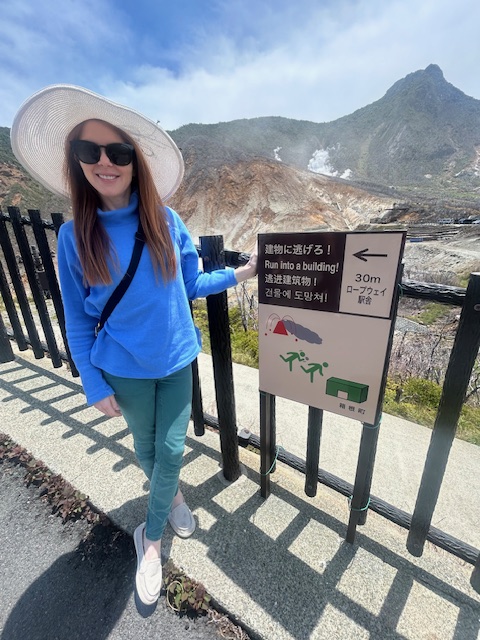
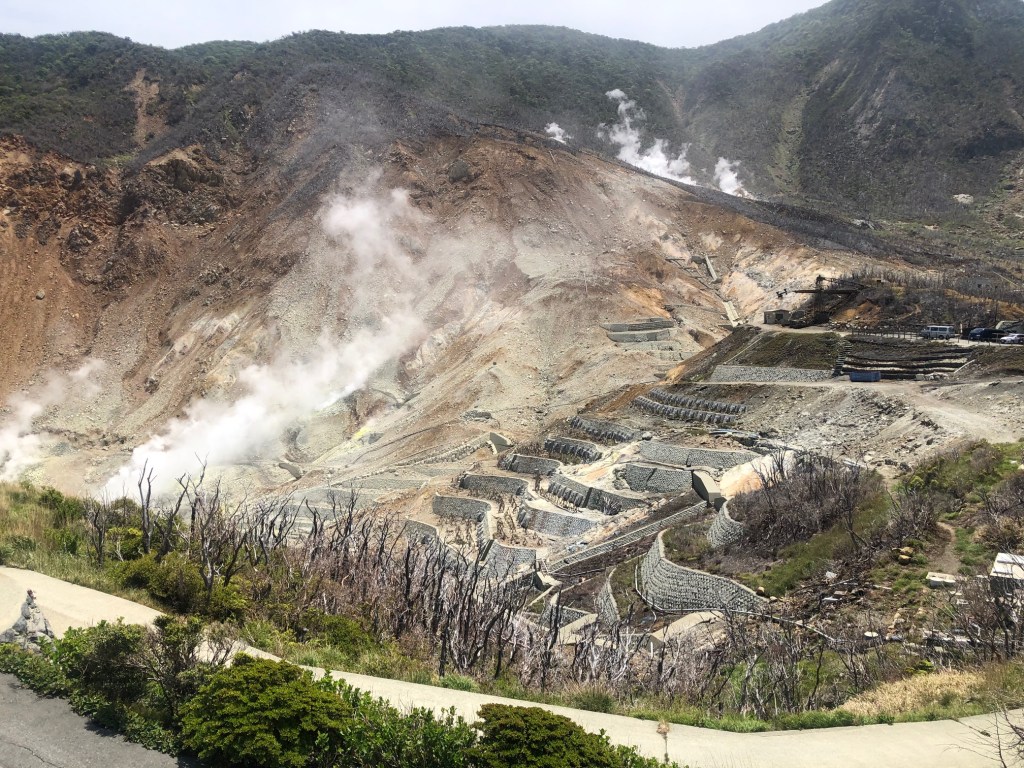
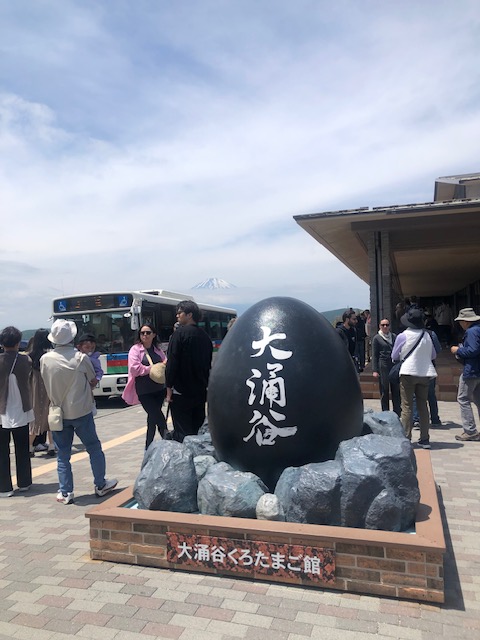
The Ropeway begins at Togendai Station on Lake Ashi, with three additional stops. We rode the Hakone Tozan bus to that end of Lake Ashi to take a boat cruise, and then hopped on the Ropeway when we returned. If you are staying in Gora and just want to check out the Ropeway, you can take a tram from Gora Station up the hill to Sounzan Station, where you can then transfer to the Ropeway.
Where to Stay in Hakone
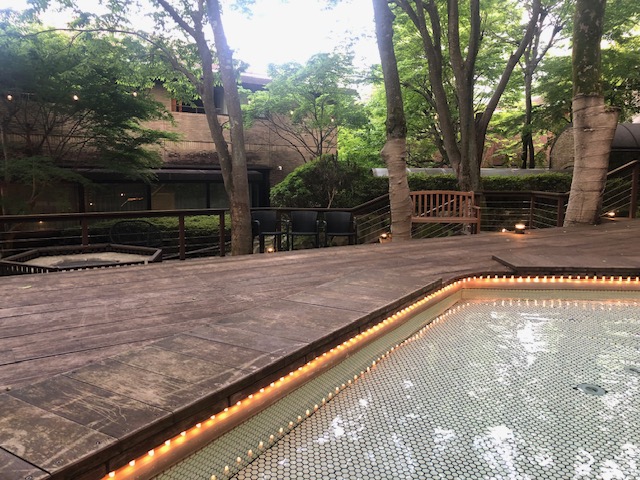
There are seven villages throughout the region of Hakone, with numerous hotels both historic and modern, as well as ryokans (traditional Japanese guest houses) offering varying amenities and levels of comfort. We chose Gora, one of the more popular towns, due to its proximity to the Hakone Open Air Museum and easy access to transportation. Other options include Yumoto, which is the last stop on the Odakyu line from Odawara Station and is a compact area of shops and restaurants. There is also Moto-Hakone, which is a stop on the Lake Ashi boat tour, and is in close proximity to the famous Hakone-jinja shrine.
We stayed at the Hakone Yutowa, steps away from Gora Station. The hotel had the moody vibes of an upscale international 1960s lodge, even though it is only a few years old. There, they have standard rooms and suites as well as condos. Since we knew Japanese accommodations are generally tiny, we chose to book a condo. The best part about splurging on the larger suite was that it contained its very own hot spring-fed tub. Since we both were weirded out at the idea of getting naked in front of strangers at the hotel’s onsen bath, we were thrilled to have a private bath we could enjoy. We also loved that we barely saw any other humans in the hallway. It felt like we had the entire place to ourselves. If you want to stay at Hakone Yutowa and are debating on whether or not to shell out for the condo–it’s 100% worth it.
I nearly always use Booking.com nowadays when securing accommodations. They have the best rates and selection of any travel booking site out there, and if you are like me and travel often, you will quickly reach “Genius” status, giving you access to 10-15% discounts on stays, attractions, airport taxis and car rentals, which I have taken full advantage of. Over the course of our Japan trip, we saved more than $600 on hotels as a result of Booking.com’s Genius discounts. That included our room at Hakone Yutowa–the reason why it was easier to level up our stay.
Where to Eat in Hakone


Hakone is not the food Mecca that Tokyo or Osaka claim to be. It’s basically the Poconos of Japan: not fancy, run by locals, close early. Don’t expect Michelin-starred meals here; you are coming for the hot springs. We had some ok ramen at a local nameless restaurant in Gora, and a decent burger and fries at Box Burger Hakone.
Many hotels in the area offer both breakfast and dinner as part of their room packages. Hakone Yutowa has a top-notch breakfast buffet, which we took advantage of during our stay. This helps take the guesswork out of meals, especially since there aren’t a ton of restaurants in Hakone, and the ones that exist are spread out among the villages.
Fun Sober Things to Do in Hakone
If you are not planning to stay overnight in Hakone, but still want to check it out on a day trip from Tokyo, Osaka or Kyoto, book a tour through Viator. This will ensure that you get the most out of your excursion with limited time. If you are staying a night or two (or more), read on for some fun non-drinking activities in Hakone.
Take a Dip in an Onsen Bath
Japanese hot spring baths, called onsens, are public bath houses popular in the mountainous regions of the country. There are different styles and types, and some are more public than others. The geothermally heated spring water is relaxing and restorative, and the special minerals are said to be good for your health. Hotels and ryokans in Hakone often have their own onsen baths, and some are open to the general public. The facilities are separated by gender, and you must strip completely naked before entering the water. The Hakone Yutowa had an onsen for hotel guests, as well as private tubs in the condo suites.
Lake Ashi Boat Cruise


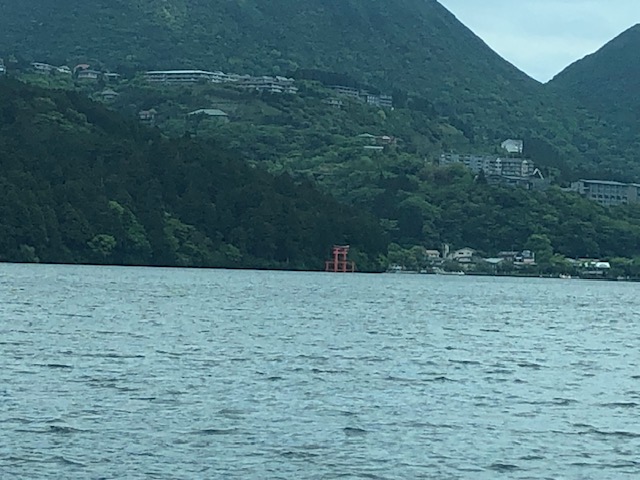
The photos in the boat cruise promotional material show Mount Fuji in the background, but don’t hold your breath. We didn’t see a speck of the mountain until we rode the Ropeway. It’s usually shrouded in clouds and is difficult to spot even on relatively clear days. However, the hour-long tour is peaceful, and guides you past several points of interest including the Hakone-jinja shrine on the banks of the lake.
If you are looking for Instagram fodder, you will find it here in spades. This was my favorite part of our trip to Hakone. Set on acres of impeccably manicured lawns and gardens, with lush mountains as a backdrop, visitors meander through trails lined with varied and unique sculptures. There is a labyrinth made of concrete, a tower of stained glass, and giant silver baubles. Inside, there is also a Picasso exhibit, although it was probably the least impressive aspect of the museum. If you luck out with a pleasant, sunny day in Hakone, you’ll very much enjoy this attraction!


More photos below…


And more…


Hiking in Hakone
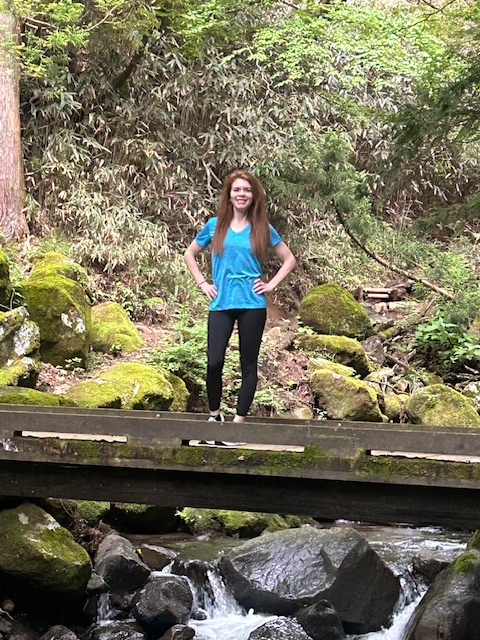
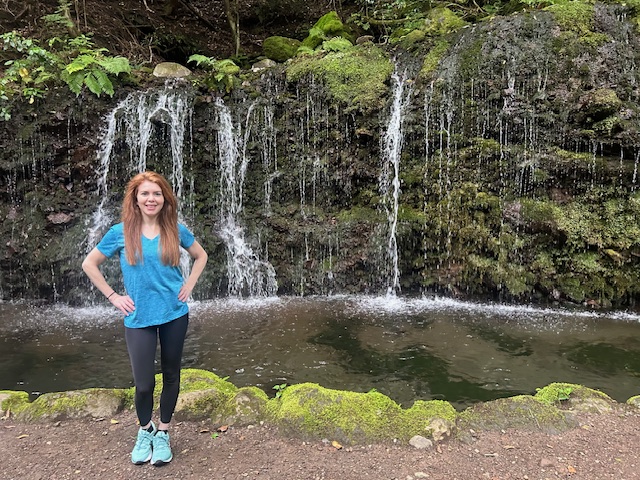
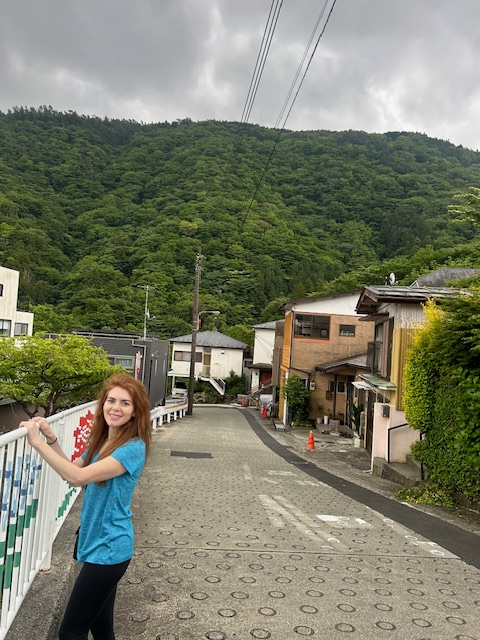
For anyone who likes hiking, Hakone has an abundance of trails for all experience levels. At the edge of Lake Ashi, near the Ropeway Station and the Lake Ashi boat tour launch, there are several well-traveled hiking trails. These are moderate in difficulty and run for about 6 or 7 miles.
On our last morning in Hakone, we walked up to Chisuji Waterfalls. There is no clear signage (at least for non-Japanese speakers) until you are close to the Falls, so we wandered around for a while up and down the road by one of the train stations. If you are heading there from Gora, you walk down the main highway for about 30 minutes, then turn right and hike up a steep road that feels like you are in a neighborhood. Keep walking, and you’ll see a sign for Chisuji Waterfalls. It’s a nice little hike once you arrive in the woods and find the trail. The Falls are crystal clear, and everything smells piney and fresh. It’s a pretty little spot, and the path goes on further up the mountain if you want to fit in more hiking.
For more information about other trails in Hakone, including mountain hikes and the Tokaido Road, check out this blog: All Japan Tours: Hiking in Hakone.
Recovery Meetings in Hakone
Sadly, there are no in-person English-speaking recovery meetings in Hakone. We went to a few AA 12-Step meetings while in Tokyo, which are full of friendly expats and English-speaking Japanese. There are also meetings in Kyoto and Osaka. So if Hakone is not your only stop, you have options. You can find the meetings here.
Planning a trip to more places in Japan? Check out my sober traveler’s guide to Tokyo to learn more about the nation’s electric capital city!
 The Temperate Traveler