
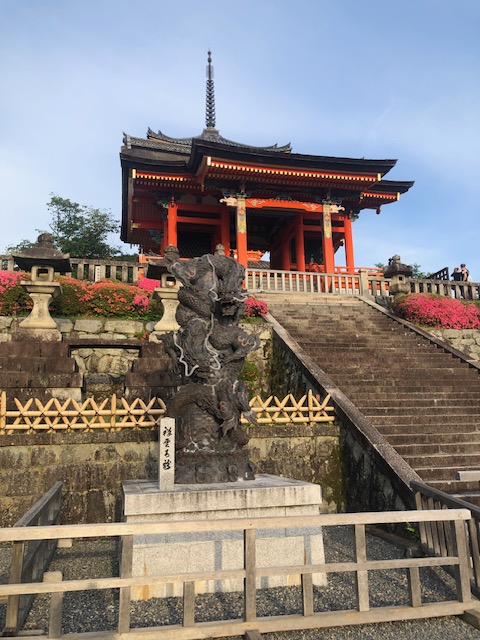

Temples, temples, and more temples…and way too many tourists. That is basically Kyoto in a nutshell in the year 2024.
Since opening back up to visitors in October 2022 after closing its borders during the Covid-19 pandemic, the country of Japan has been a red-hot tourist destination. Its former imperial capital city, Kyoto, is a current cultural hub. With its centuries-old temples and shrines, bamboo forest, and geisha, it seems to be on everyone’s itinerary. Unlike Tokyo, the most popular sights and activities are concentrated in a few areas. So if you are going to, say, the Golden Pavilion, you will share it with 8,000 fellow tourists.
After spending time in Tokyo and Hakone prior to Kyoto, we were excited to visit this city that is a favorite of many travel writers and bloggers. It did not live up to expectations. The crowds were overwhelming, and the temples, shrines and gardens all blended together after a while. Other attractions, like the Arashiyama Bamboo Forest and the Philosopher’s Path, were uninspiring: the Bamboo Forest was crammed with people elbowing each other for enough room to take Instagram photos, and the Philosopher’s Path was an overgrown trail next to a trickle of water.

Kyoto did offer redeeming qualities. The food is amazing, the people are unfailingly polite, and the environment is impeccably clean. If you can wake up early enough to hit some of the more popular attractions at daybreak, like the Fushimi Inari Shrine, you will be rewarded with an enjoyable, crowd-free experience. I’ll share some of these tips later in the post.
As with other cities and locations in Japan, you won’t find conspicuous consumption of alcohol during your travels. Especially in a place like Kyoto, tea is more revered than booze. There are also several English-speaking 12-Step meetings in the city, which is a great opportunity to reset and meet some fellow sober locals.
Read on to learn more about how to travel sober (and avoid annoying crowds that make you want to drink!) in Kyoto, Japan.

Planning a Sober Trip to Kyoto
Booking your Flight to Kyoto
If you are an international visitor heading to Kyoto, you have a few options. Most travelers will spend a few days in Tokyo first to break up the journey, which we did. If you are heading to Kyoto first, you can fly into Tokyo Narita and take the 2-hour Shinkansen bullet train ride, or you can fly straight from Narita or Haneda into Osaka International Airport (also known as Itami Airport). This is the closest international airport to Kyoto. From there, it’s a 45-minute taxi ride to Kyoto proper. There are also a few public transportation options out of Osaka International, which you can navigate via Google Maps. I prefer to spend a few extra bucks on a taxi or Uber when I first arrive in a country that I am not familiar with, so I don’t spend time struggling to negotiate a foreign public transportation system when I am exhausted from a long flight.
Customs in Japan
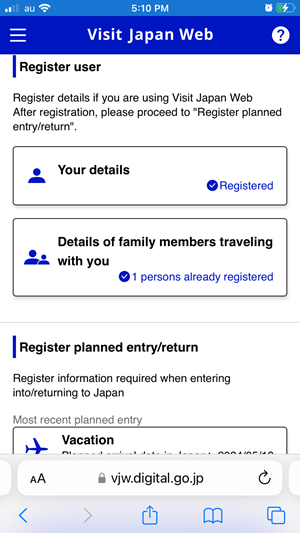
Getting through customs is a notoriously long ordeal in Japan. To make life slightly easier, you can register yourself and your travel companions on Japan Web and fill out the customs form online. You will still stand in line, but you won’t end up being one of those confused passengers furiously trying to upload the web page as you approach the customs officers.
Learn a few words of Japanese
Most Japanese citizens do not speak English, so it’s helpful to know a handful of words like Connichiwa (“Hello”) and Arigato (“Thanks”) to communicate with those around you. Hotel staff typically do speak enough English to check you in and to answer basic questions, but generally not waitstaff, cashiers or others you may come in contact with. Google Translate kind of works, but it often wasn’t helpful in the moment. We did our best with hand gestures and broken Japanese phrases, and leaned on tour guides and hotel staff who could speak English and assist us with any pressing questions or needs.
Budgeting for Kyoto
The Japanese yen has been weak compared to the American dollar in 2024, partly fueling the country’s tourism boom. Since Japan is not the cheapest place on earth, this helps ease the hit to your wallet. Like with all of my international trips, I purchased about $300 in foreign currency from my bank prior to leaving, to obtain a favorable exchange rate. A common denomination, 5000 yen, is equal to about $34 in US currency as of August 2024.
This tactic also gives me cash on hand in case there are any snafus with my credit card, or if I need to give a tip to the taxi driver. While Japan is a very developed and modern country, cash is still widely used.
When Should I Plan My Trip to Kyoto?
Japan has a temperate climate, with variations in weather depending on the region and elevation. You can typically expect the best weather in the Spring and Fall. Kyoto is located inland and is often several degrees warmer than other cities on Honshu. During our mid-May trip, we enjoyed dry, sunny tank-top weather in the mid-80s.
In addition to weather, you should also be aware of national holidays. We strategically chose mid-May to travel to Japan, right after cherry blossom season and Golden Week but before the rains moved in during the summer months. Cherry blossom season typically runs from the end of March through mid-April and is the busiest time of year for tourism in Japan. Golden Week is a national holiday that takes place in early May, which means a lot of domestic travel and high prices everywhere. It’s best to avoid those times of year when booking your dates for Kyoto. However, mid-May is also when school trips take place.
When we were in Kyoto, busloads of students were set loose at the popular temples and nationally significant landmarks, like the Golden Pavilion, making the experience claustrophobic and irritating. If I had to do it again, I would have chosen September or October to travel to Kyoto, when the weather is nice but the crowds may not be as intense.
Protecting Your Trip to Kyoto
Our trip to Japan was the most expensive trip we’ve taken so far, and we wanted to make sure we didn’t light thousands of dollars on fire if, say, one of us broke an arm and were not able to travel. Since our medical insurance doesn’t cover us outside of the US, we wanted to know we’d be taken care of if anything were to happen during our vacation. So we purchased travel insurance through AXA. I truly appreciated the peace of mind it gave us as we prepared for our trip, and also while we were enjoying our time in Kyoto. Prior to the pandemic, I never bought travel insurance, but now I purchase it for every international trip I embark on. It’s worth it!
Getting Around in Kyoto
While not quite on par with the world-class public transportation system of Tokyo, you can still get everywhere you need to go in Kyoto via subway, rail or bus. Google Maps is a godsend when trying to navigate public transit in Kyoto. It will show you which buses and trains to take to get to your destination. Most locals use public transportation, and it is safe, clean and on-time. Taxis are also plentiful and not too expensive. We took one from Kyoto Station to our hotel near Gion for less than $10.
Where to Stay in Kyoto

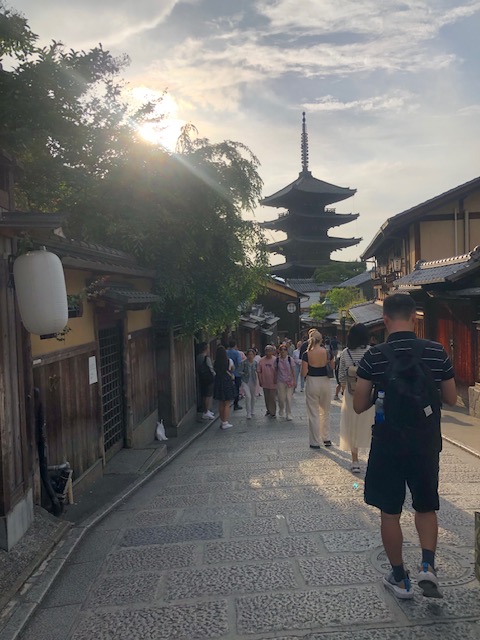
Outside of the historical district, Kyoto looks like any other city, with a congestion of buildings and traffic. There are a few Kyoto neighborhoods in close proximity to public transportation and attractions, with a more traditional Japanese vibe. We stayed at the moody and stylish Nohga Hotel in Higashiyama, which encompasses the historic district of Gion. This neighborhood (or ward, as it is called in Kyoto) is located within walking distance to many popular attractions but not far from the trains and buses we needed to travel to other areas of Kyoto. Gion is where you can find the iconic narrow cobblestoned streets lined with machiya, or traditional wooden town homes, and possibly spot a geisha heading to an appointment. Be aware that you will do a lot of walking in this district, and it is fairly hilly.
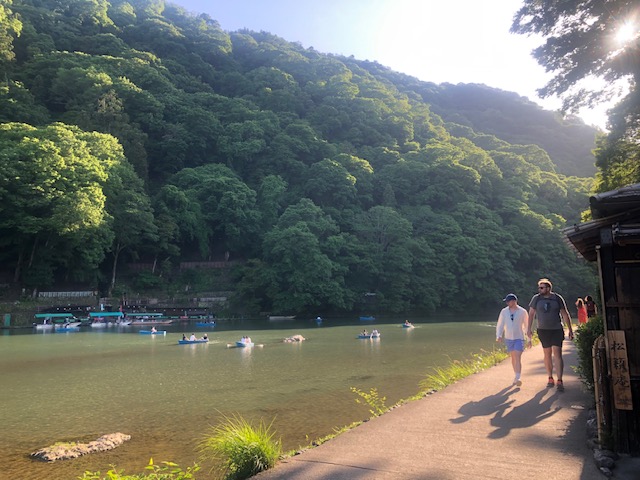
There are other wards that are well-suited for first-time visitors in addition to Higashiyama. These include Nakagyo, north and west of Higashiyama, with many cultural sites including Nijo Castle; Shimogyo, centrally located close to Kyoto Station; Fushimi, home to the glorious Fushimi Inari shrine and ideal for budget travelers; and Arashiyama, which is on the western outskirts of Kyoto and has its own vibe and more green space than other areas.

Where to Eat in Kyoto
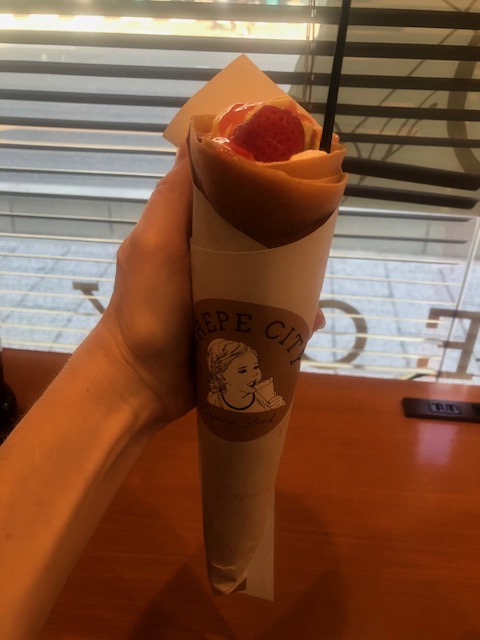
The food in Kyoto was the highlight of our time there. Everything we ate was phenomenal…with the exception of crepes. The Japanese seem to love crepes (they even have a place called Crepe City in Gion) but they are always disappointing. I am obsessed with crepes and tried so hard to find a good crepe in Japan, but every time I tried one, they were cold and gummy.
Now that we have established that you should never eat a crepe in Japan, let’s get to the highlights. I ate the best ramen of my life at Musoshin Gion, about a 10-minute walk from our hotel in Higashiyama. Like most quality ramen spots, it had limited seating and there was a line out the door. We went twice while we were in Kyoto and waited about 45 minutes each time. But it was absolutely worth it. The broth had a thicker consistency than most ramen bowls we’ve eaten, it was perfectly seasoned, and the pork belly and eggs were perfect. We also got a side of fried chicken, of which I could have eaten an entire bucket.


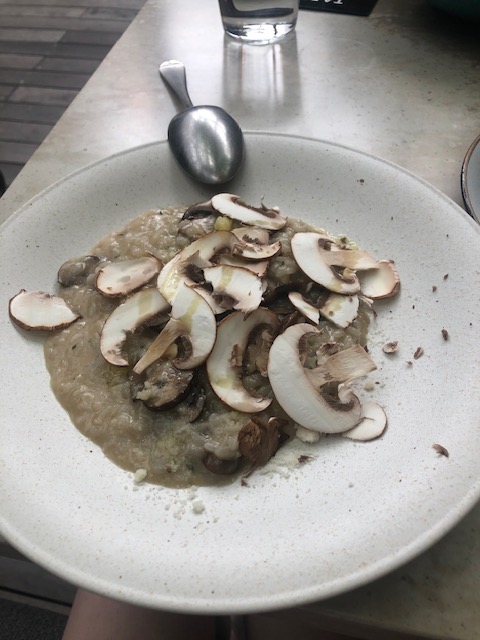
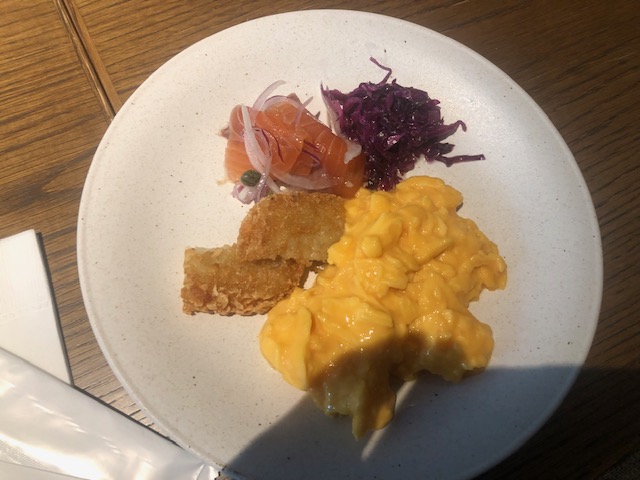
When we booked our hotel stay at Nohga, we purchased the breakfast buffet. It was truly the best breakfast I’ve ever had at a hotel. Not only did you get to choose from six main dishes like eggs, mushroom risotto, and elevated eggs benedict, there was a smorgasbord of breads, pastries, yogurts, fruits, and cereals to supplement. During our stay, we basically just filled up on breakfast, skipped lunch and ate ramen for dinner.


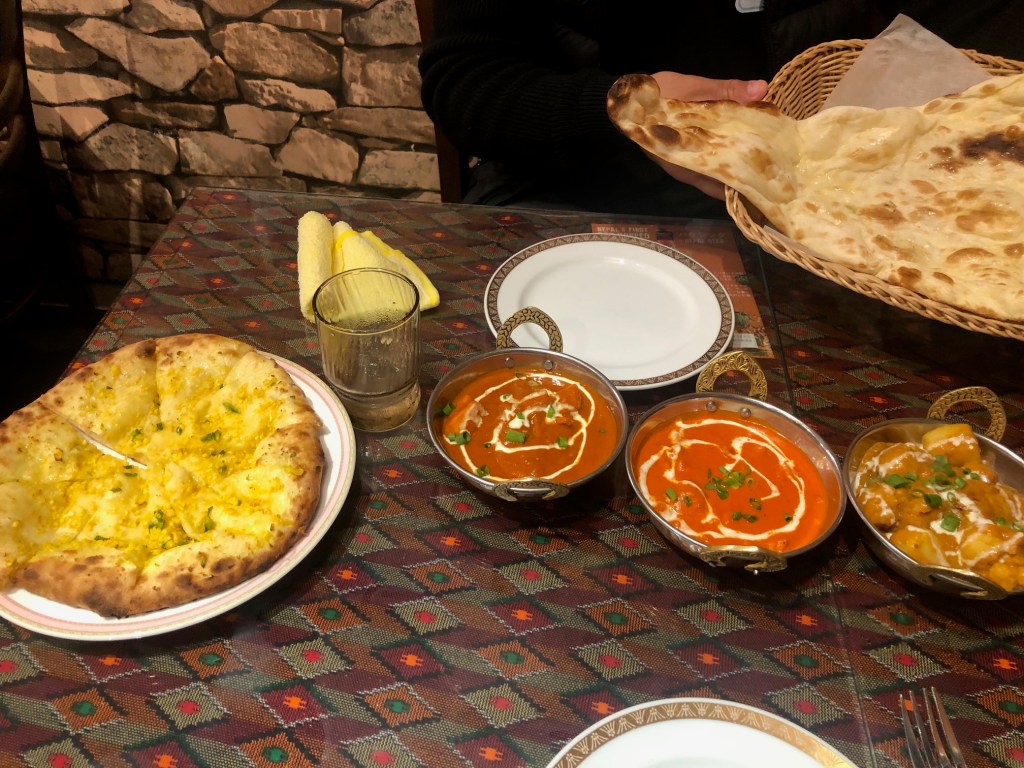
When we got tired of eating Japanese food, we found a phenomenal Indian place called Namaste Dhaulagiri in Higashiyama. Make sure you get the cheesy naan, it’s delightful.
Fun Sober Things to Do in Kyoto
Temple-hopping

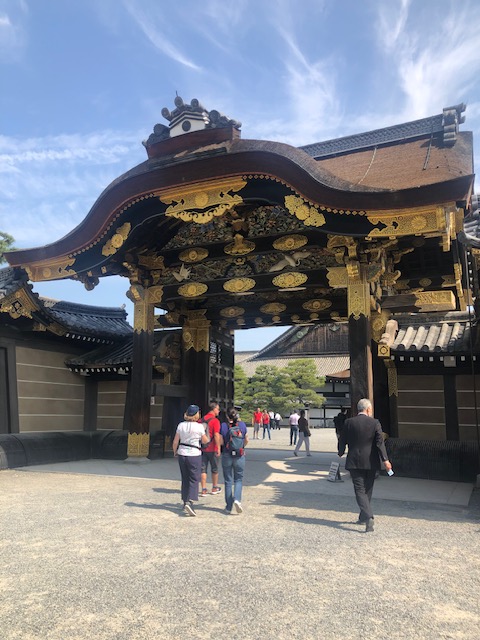

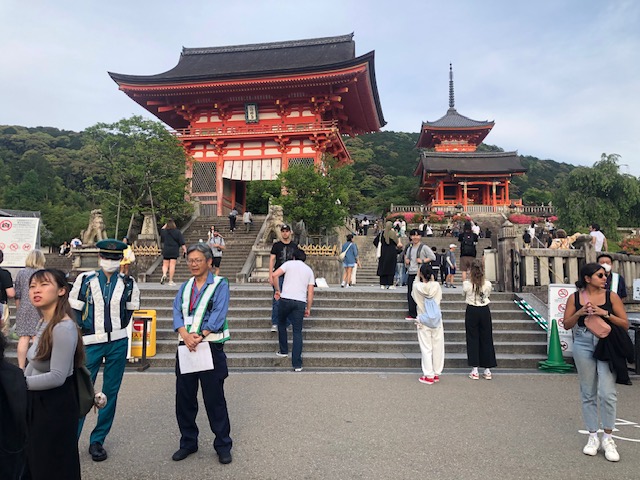
There are more than 1,600 Buddhist temples and 400 Shinto shrines in Kyoto. Basically, if you wander around the city, you’ll have a hard time not bumping into a temple or shrine. Many of them are worth taking a peek, although after a while it can get monotonous. You can only crunch around meditative gravel paths and light incense offerings so many times.
Sometimes you can explore these temples and shrines for free. Other times you’ll get charged a few yen. I don’t mind, as it helps pay the staff and maintain the building.
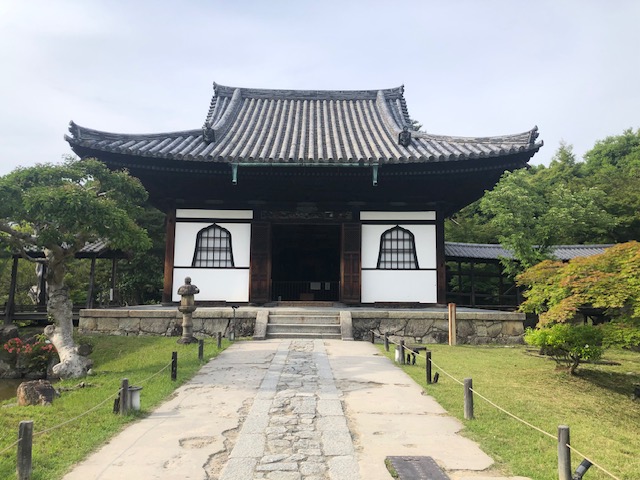
Since there are so many temples and shrines, it can be tough to narrow down the list. A highlight was Nanzen-Ji Temple, on the north end of Higashiyama. It is the epitome of a Japanese Buddhist temple, with lush gardens, delicate wooden buildings, and contemplation-encouraging walkways.
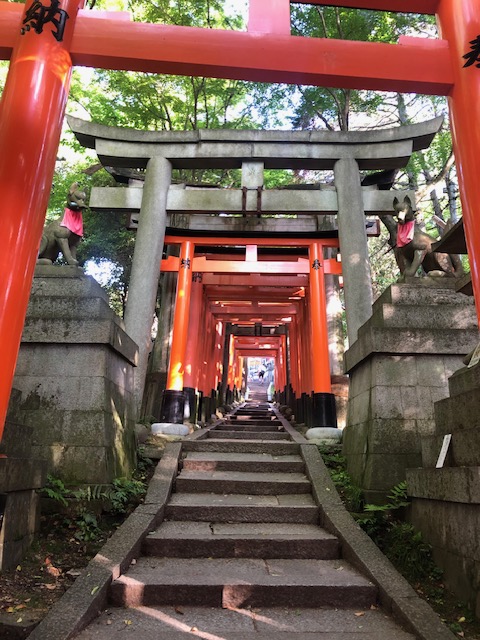
Our favorite was the Fushimi Inari shrine, home to the iconic 10,000 red torii gates. We took the subway from our hotel to the Fushimi (Nagoya) station at 6am. When we arrived, we were the only souls there. The grounds of the shrine are expansive and encompass the side of a mountain. We trekked up the trails underneath the torii gates and a green canopy of trees. A detour into a cemetery revealed various elevations of Japanese-style stone columns and wooden planks called sotoba honoring the deceased. It was quiet and magical. We reached one of the vista points around 7am, and crowds were already starting to grow. By the time we left around 7:30, throngs of people were blocking the pathways to take Instagram photos, ruining the vibes.
Day trip to Nara
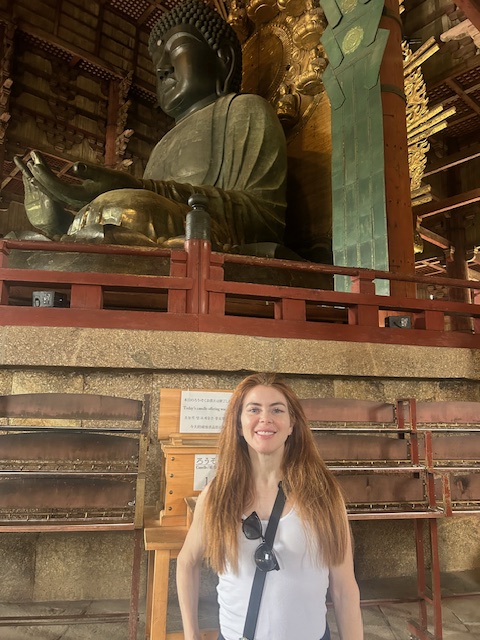
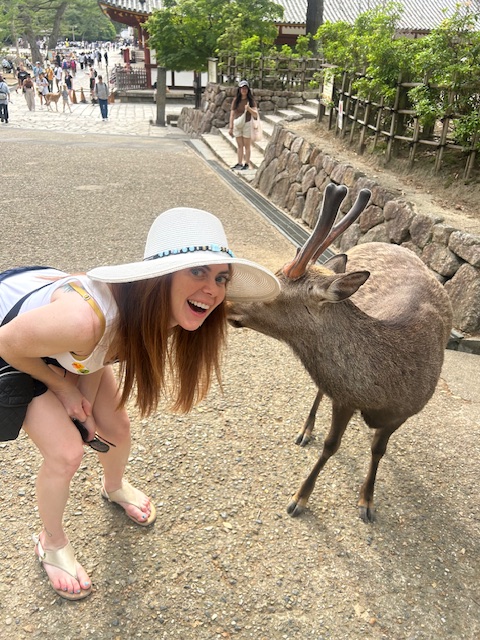

Before Kyoto was the imperial city of Japan, that title belonged to Nara. Nara is a 45-minute Shinkansen ride from Kyoto, and a perfect day-trip destination. Though the crowds followed us here too, it felt a bit more low-key than Kyoto. The main attraction is the vast Nara Park that includes the Todaiji temple, which hosts a massive Buddha statue that was erected some 1300 years ago. The emperor at the time ordered the construction of the bronze and gold statue to help spread Buddhism throughout Japan, and almost bankrupted the nation in the process.
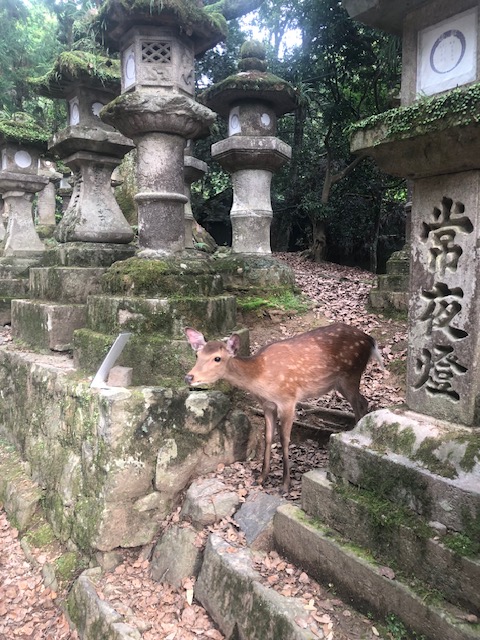
Nara is also home to Kasuga Taisha shrine, known for its hundreds of bronze and stone lanterns. The complex is set in an old-growth forest and features various auxiliary shrines.
During your time in Nara, the tame and friendly Nara deer will probably come up to you looking for food. Some of them have learned to “bow” to visitors. These animals are considered sacred and protected as a natural monument.
Walk around Gion (early)
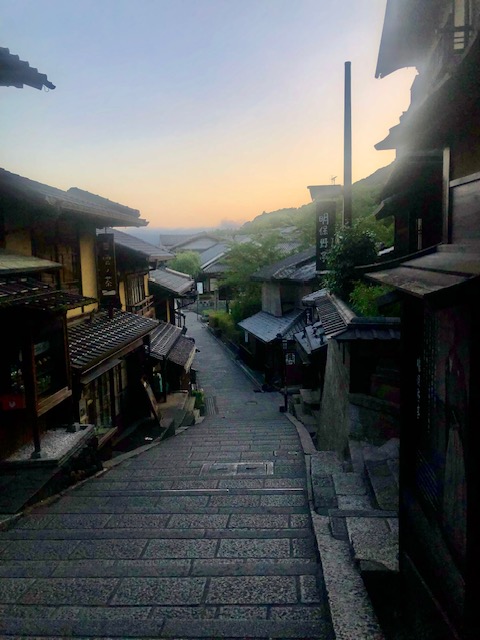
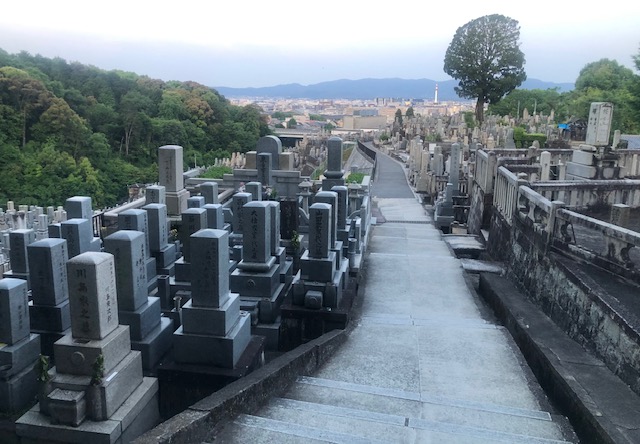
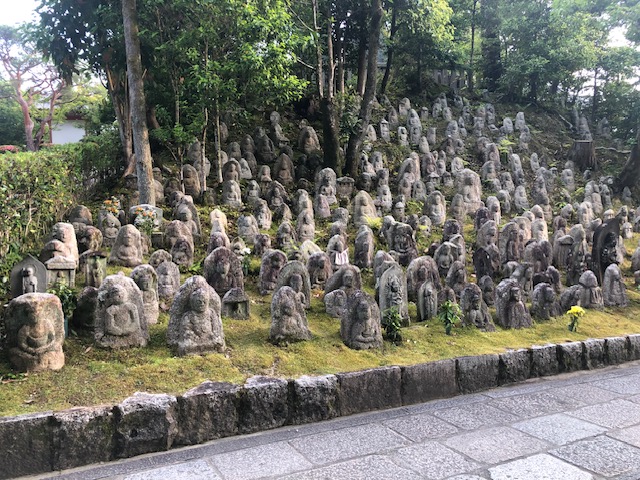
If you have arrived in Japan from the West, you’ll find yourself waking up at 3am due to the time change. This lends itself to an early start during your stay in Kyoto–great for avoiding crowds. Gion is a totally different place at sunrise than it is midday. While the shops are not yet open, you can wander peacefully through the winding streets and public gardens, taking in unobstructed views of the various shrines and temples in the district. You can feel the Zen you expected when you were excitedly planning your trip to Kyoto.

Booking a tour is super helpful for learning more about Japanese history and culture. Tours give insight into and context for what you are seeing in your travels. The guides will speak English, and they will gladly answer questions. We booked the Kyoto & Nara Day Trip -Golden Pavilion & Todaiji from Kyoto on Viator. This daylong tour took us to the aforementioned Golden Pavilion, Nijo Castle, Kyoto Imperial Palace and several sites in Nara. Our tour guide was very informative and also unintentionally hilarious. It made for an entertaining day.


Recovery Meetings in Kyoto
There are multiple English-speaking AA meetings in Kyoto as well as Osaka, which is a short 30-minute train ride away. You can find the meetings here.
While Kyoto is struggling with overtourism, sober travelers can still enjoy the positive aspects of this ancient city with careful planning. Avoiding peak travel times like cherry blossom season, Golden Week, and the end of school, and planning your visits to popular attractions for early or late in the day, will help you steer clear of annoying crowds. You can also research less popular but equally as cool shrines and temples, as well as head to Nara and other interesting spots outside of the city.
Planning more stops during your trip to Japan? Check out my sober traveler’s guides to Tokyo and Hakone to learn more about other amazing places in the land of the rising sun!
 The Temperate Traveler
One thought on “Traveling Sober in Kyoto, Japan”